Kshamenk, the orca rescued from a stranding in San Clemente, has died
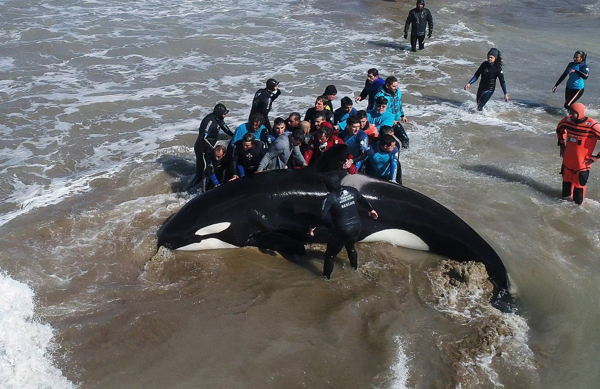
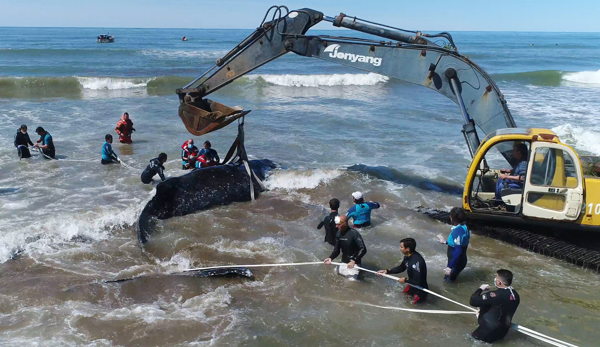
Kshamenk had been rescued in 1992, when he was a calf, following a stranding. With no possibility of being reintroduced to the wild and following the recommendations of international experts and national authorities, the Mundo Marino team took charge of his rehabilitation and care for more than 33 years. Thanks to that care, he lived beyond the average life expectancy of a male orca in the wild.

With deep sorrow, we wish to share that today, surrounded by his caregivers and the veterinary team, Kshamenk passed away. His death was caused by a cardiac arrest. The circumstances and underlying cause that led to this event are currently being evaluated. All indications suggest that it was related to his advanced age, from which he was unable to recover despite the constant care and dedicated efforts of the professional team responsible for his well-being.
“It is very difficult to describe the pain we feel at Kshamenk’s passing. With him, a part of each of us is gone. We are a large team of people who dedicated our lives to ensuring his highest level of well-being 24 hours a day, seven days a week, for 33 years. He was part of our family. We are comforted by knowing that we cared for him with all our love and by the certainty that what he taught us is an invaluable legacy that will allow us to continue working for the conservation of many other animals,” said Juan Pablo Loureiro, Head Veterinarian at Mundo Marino.
Kshamenk’s story dates back to February 1992, when Mundo Marino rescuers received an alert. Local residents reported that four animals had stranded in the Ajó Inlet, which flows into Samborombón Bay. However, when professionals arrived, they found only a small orca. An initial assessment showed that the animal was in critical condition. Various methods were attempted to carry out the rescue and reintroduction, but all were unsuccessful because the animal was extremely weak. The only remaining option was to transport him to Mundo Marino’s facilities, with the approval of national authorities, so that he could receive appropriate treatment for recovery.
The process was long and complex, as it involved not only addressing his fragile health but also his social and emotional situation. In addition to the stress of the stranding, he had lost his family group. Orcas live in large matriarchal pods and remain with their mothers during their early years. The mother teaches the young orca how to hunt and survive on its own, while the entire social group plays an important role in the education of new members. Without them, survival in the first years is unviable.
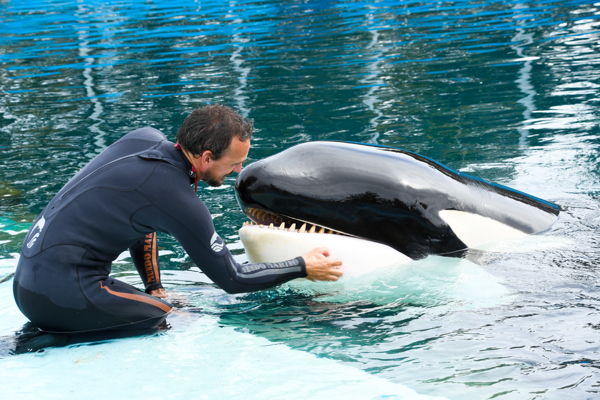
For this reason, after his rescue, every effort was made to ensure that Kshamenk was constantly accompanied and that he gradually built trust with the people caring for him, allowing them—without fear—to take samples for health monitoring and to accept the food offered to him. This necessary situation to save his life led the orca to become accustomed to human contact and to see his caregivers as part of his new social group, making reintroduction impossible, since the animal, unfortunately, would not have survived in the wild without his family group. Thanks to the care he received, he was able to live the number of years that a male orca lives on average in the wild (30 years).
“Kshamenk taught us a great deal about love and about how we can understand one another without sharing the same language. He was a beautiful, curious soul who challenged us to be creative so that every day brought him something new. He was very gentle and sought our affection and touch—those were his favorite moments of the day, and ours as well. We will miss him with all our hearts, because he left an indelible mark on our lives and on the lives of everyone who knew him,” said Florencia Speciale, one of Kshamenk’s caregivers.
His caregivers, veterinarians, and the entire Mundo Marino team bid farewell to Kshamenk with profound sorrow, renewing our commitment to continue working—through the Educational Park and the Foundation—for the conservation of our country’s threatened marine biodiversity.
For more information about Kshamenk’s story, you can visit the following website:


Some rescue and reintegration stories that were made possible thanks to what Kshamenk taught us: